A seawall on Florida’s Gulf Coast works every day. Tide cycles, boat wake, summer rain, and storm surge all push on the same structure, and the parts that fail first are usually small and cheap to deal with while they are still small. Maintenance is mostly a matter of knowing what to look at and not letting it sit. Here is how waterfront owners in Bradenton and along the surrounding coast keep a seawall in service.
What Seawall Maintenance Covers
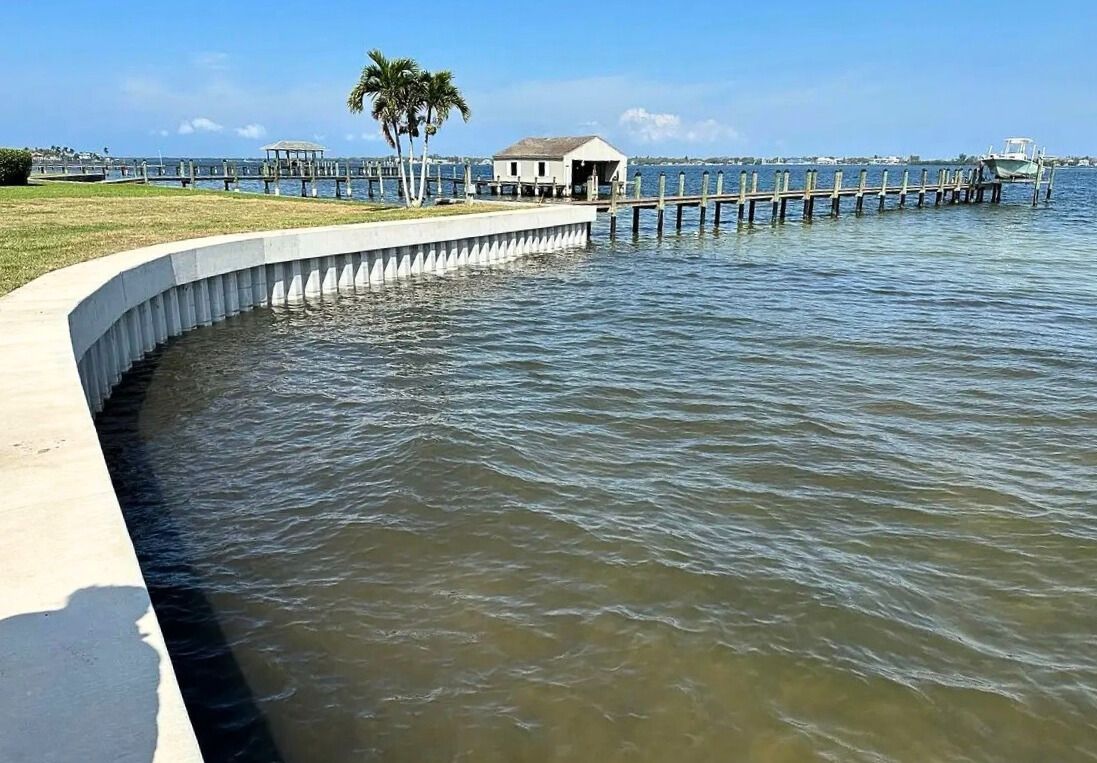
Upkeep on a seawall is a short list of recurring items: inspections, repairing cracks, applying waterproof coatings, addressing erosion at the toe and behind the wall, reinforcing the structure where it has started to move, and replacing caps that have cracked or pulled apart. None of it is dramatic on its own. Together it is the difference between a wall that gets serviced and a wall that gets rebuilt. Most of these items are visible from the yard or from the water, so an owner can spot them without special equipment and without getting in the water.
What to Look For When You Walk the Wall
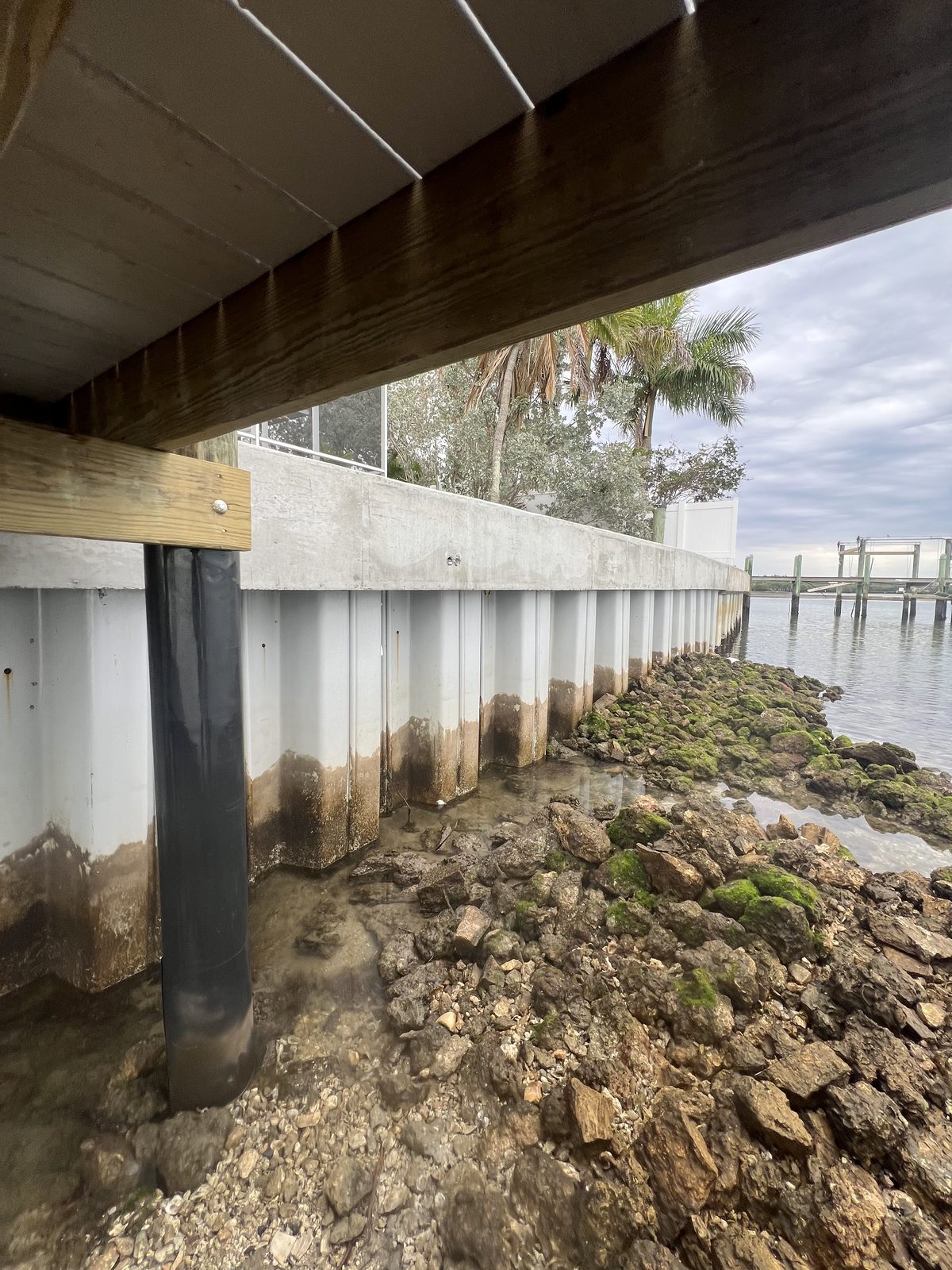
Start with the cap, the concrete surface running along the top. Hairline cracks are common on any wall of age. Cracks wide enough to catch a fingernail, or cap sections that have shifted out of line with the ones beside them, are worth writing down. Next, look at the joints between panels for gaps and for any sign that soil is moving through them rather than staying behind them. Then turn around and study the ground behind the wall: sunken sod, a low spot that keeps coming back after you fill it, pavers that have started to tilt toward the water. From a boat or a kayak, check the face of the wall and the toe for undercutting and for riprap that has shifted out of place.
Why Small Problems Get Expensive
A seawall usually fails from the back, not the face. Water that cannot drain builds pressure behind the panels, and soil that escapes through a joint takes support with it. Left alone, the sequence runs from lost soil to structural damage to a higher flood risk on the property, and the cost of fixing it grows at every stage. It shows up at sale time too, because buyers on this coast look closely at the condition of a shoreline before they look at anything else. Sealing a joint or correcting drainage is a far smaller job than rebuilding the run of wall it sits in.
When Maintenance Turns Into Repair
Some findings move past upkeep. Panels that bow outward, anchors that have given up, and caps that have separated over a long run are structural, and they need a plan rather than a patch. Seawall repairs handle contained damage such as a cracked panel or a failed section of cap. Seawall tiebacks anchor the wall back into stable soil behind it, which is the fix when the panels are sound but the restraint holding them upright is not. If a wall has been patched repeatedly and the same symptoms keep returning in new places, the conversation usually shifts to new seawall construction.
Get a Set of Eyes on It
A documented waterfront inspection gives you a baseline: photographs, measurements, and a written picture of what the wall looks like right now. That baseline is what makes the next look useful, because change is easier to judge than condition. Anderson Dock & Lift Co is veteran owned and operated, our contractors are marine licensed and insured, and we are members of the Florida Marine Contractors Association and the Seawall Repair Network with over 60 years of combined experience on this coast. If you want your seawall looked at, request an estimate and we will come back to you with a free quote within 24 business hours.