
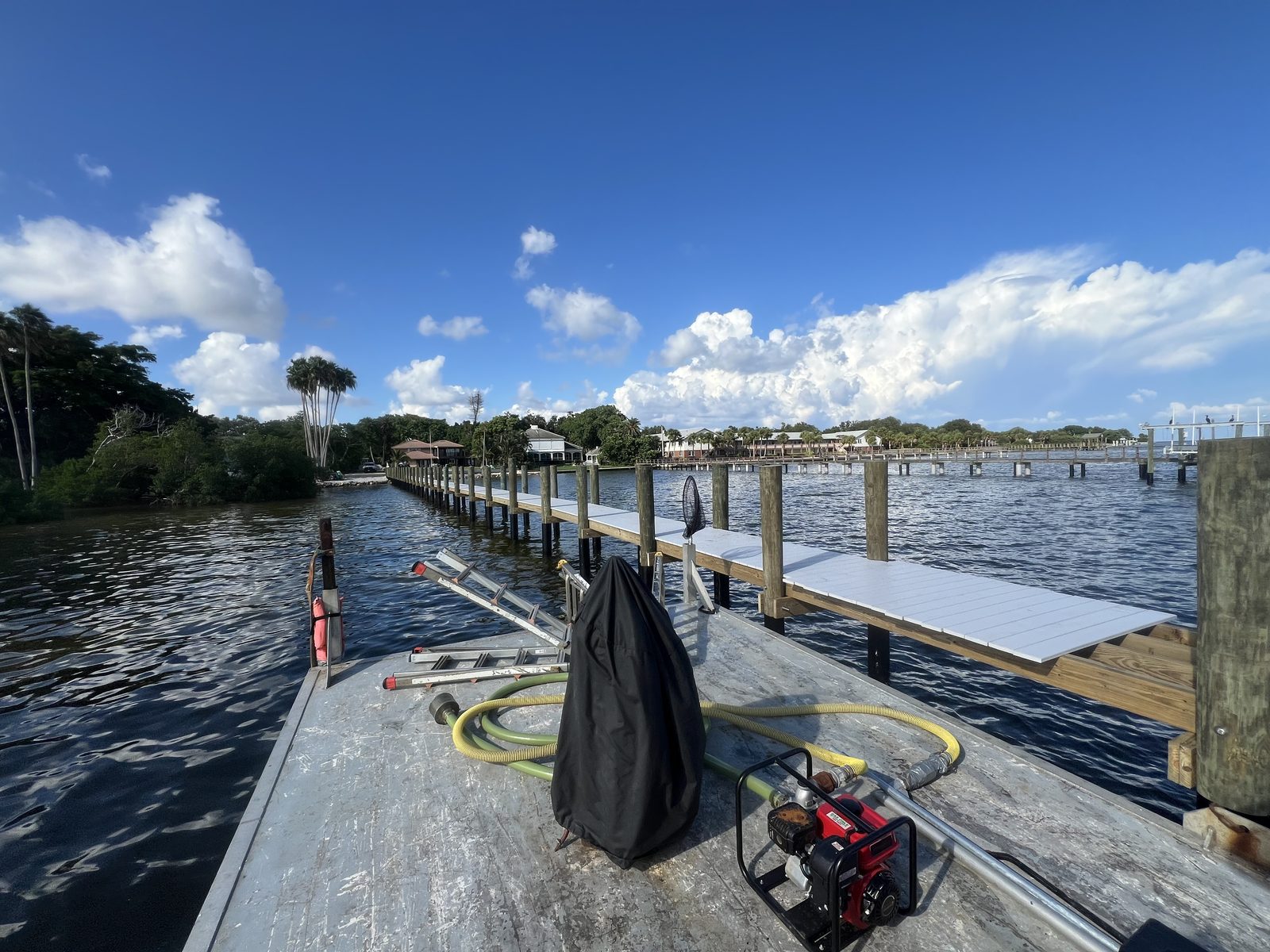
Take the boat off the lift before a storm. Owners skip this step because the lift held last time. A loaded lift that fails in a surge can take the pilings and part of the dock with it.
Anderson Dock & Lift builds and repairs seawalls, docks and boat lifts on Florida’s Gulf Coast from Bradenton. License SCC131152520. In business since 2019.
Guide updated September 2026. Reviewed each June before the season.
Quick answers
- Get the boat off the lift. Trailer it inland if you can. A lift’s weight rating assumes a boat sitting still. It says nothing about wind and surge pushing on the hull.
- Cut power to the lift at the disconnect before the storm. After flooding leave the electrical alone. That is licensed work.
- Photograph and write down every bit of damage before anyone cleans up.
- Florida does not require a state environmental permit to restore a seawall damaged by a storm in the last year. The new wall must sit no more than 18 inches farther out than the old one (Fla. Admin. Code R. 62-330.051(12)(b)). County and city permits still apply.
- Look up any contractor’s license number yourself at the Florida DBPR licensee search before money changes hands.
Before the season
Do the structural work before June
Hurricane season runs June 1 to November 30. The busy months on this coast are August through October. By August marine contractors from St. Petersburg to Fort Myers are booked out. Permits take weeks and materials go to whoever ordered first.
Schedule structural repairs for the first half of the year: the cracked cap, the leaning section, the tiebacks nobody has checked in years and the lift cables you keep putting off. A waterfront inspection covers the wall, dock, pilings and lift in one visit and tells you what is a repair and what is a replacement. What is left for storm week should fit in an afternoon.
Before the season
Start with the seawall
Seawalls that fail in a storm usually had a problem before the storm: clogged weep holes, a cracked cap, a tieback that let go or fill that had already washed out behind the wall.
Surge pushes water against the outside of the wall and then drains away. Rain soaks the fill inside. For a few hours the wall holds wet heavy soil with nothing pushing back. Weep holes are the small drains near the base of the wall that let that water out. Clogged weep holes send the pressure into the panels and the tiebacks that anchor the wall.
Before the season check drainage first:
- Clear the weep holes.
- After a heavy rain note where water pools on the land side. That is where the fill is saturating.
- Look for the signs the wall is losing ground: cracks in the cap or panels, a leaning section, bulging panels, gaps between segments, rust stains, exposed rebar and soil sinking behind the wall. Any of these calls for a seawall inspection.
The soil behind the wall holds the pilings. The pilings carry the dock and the lift. When a seawall fails in a storm the repair usually includes the dock and the lift too.
Storm week
Storm week checklist for the dock and lift
Start as soon as a storm is in the forecast. It takes an afternoon.
- 1Get the boat off the lift and out of the water if you can. Trailer it inland. If you cannot, arrange inland storage before the season. Never ride out a storm aboard.
- 2Cut power to the lift at the disconnect. Know where the disconnect is before you need it. Flooded waterfront electrical is a job for a licensed electrician. Not for you and not for us.
- 3Set the lift to the storm position for your model. Check the owner’s manual or call the manufacturer before the season. The wrong position catches more wind or puts the cradle in the surge.
- 4Strip the dock. Chairs, grills, kayaks, ladders, planters, dock boxes and hoses. Every loose item is a projectile.
- 5Take down canopies, covers and shade sails. A frame that blows over can pull decking and pilings with it.
- 6Double up and lengthen lines on anything that stays in the water. Allow for water well above normal high tide.
- 7Photograph everything. Wide shots of the whole wall and dock, then closer shots of each section. Dated photos of a sound structure are your proof of what the storm did and what was already there.
Do not go out to secure anything once conditions have turned.
After the storm
After the storm: the first 72 hours
Treat every waterfront structure as unsafe until someone competent has looked at it.
A seawall that looks intact can be sitting over a void where the fill washed out. The ground beside it can give way under a person. A dock with a shifted piling can be holding on friction. Downed lines in standing salt water are lethal. Keep children and pets off all of it until then.
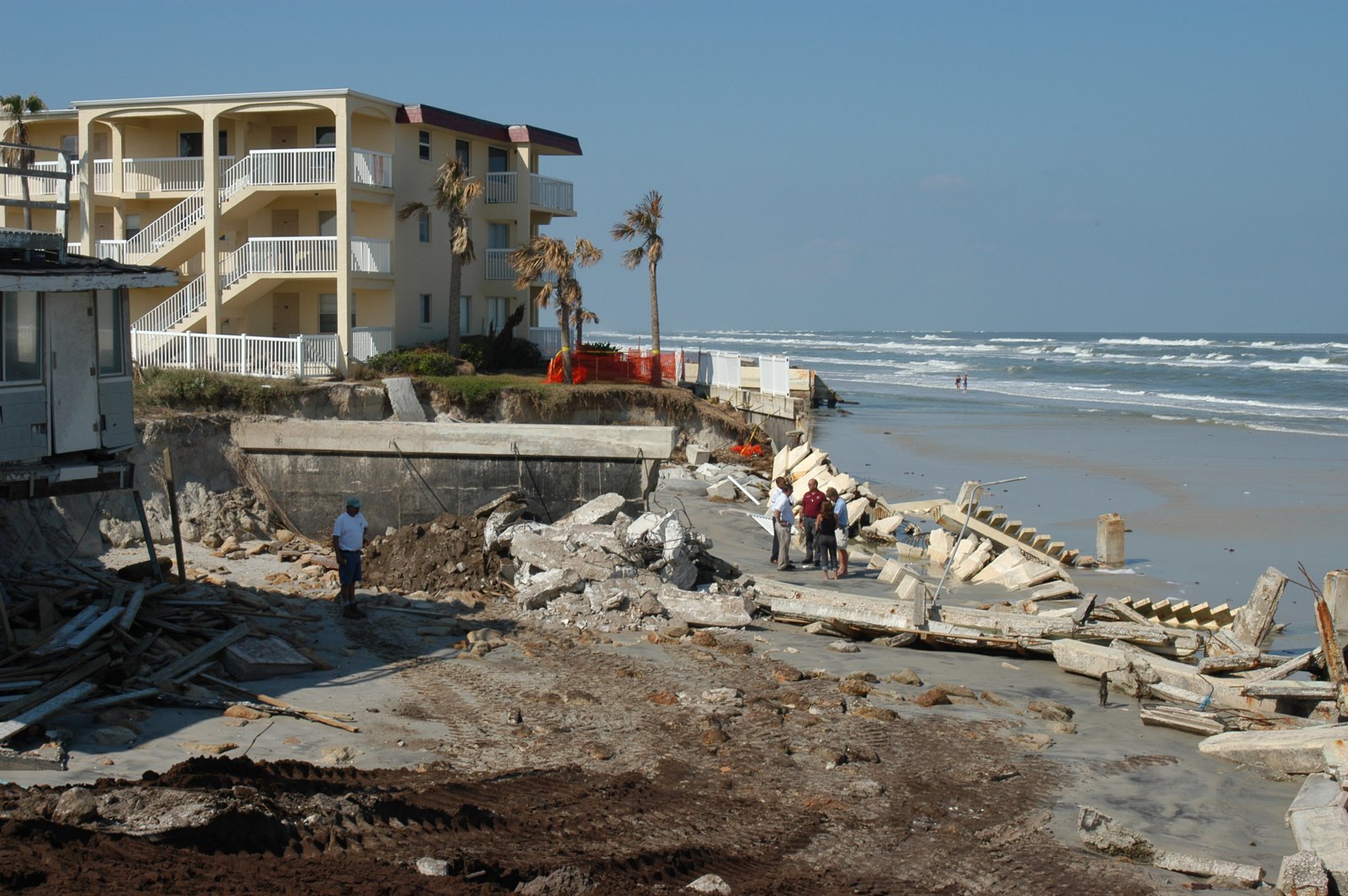
Once it is safe to be outside:
- 1Look from land. New cracks. A lean that was not there before. Soil washed out behind the wall or soft ground near it. A dock out of level. Pilings that shifted or lifted. A lift out of alignment or with damaged cables.
- 2Document before you clean up. Clearing debris destroys the record of how the structure failed.
- 3Stop the losses you can stop safely. Tarping, pumping water off a deck and blocking access to an unsafe structure are fine. Structural work is not. Improvised repairs often have to be pulled out before real repairs can start.
- 4Get a written assessment from a licensed marine contractor. Your carrier and every contractor who bids will work from that scope of what failed and why.
Do not run the lift to see whether it still works. Salt water in the motor and the drive and the cables does damage. Running them wet makes it worse. Have the lift looked at first.
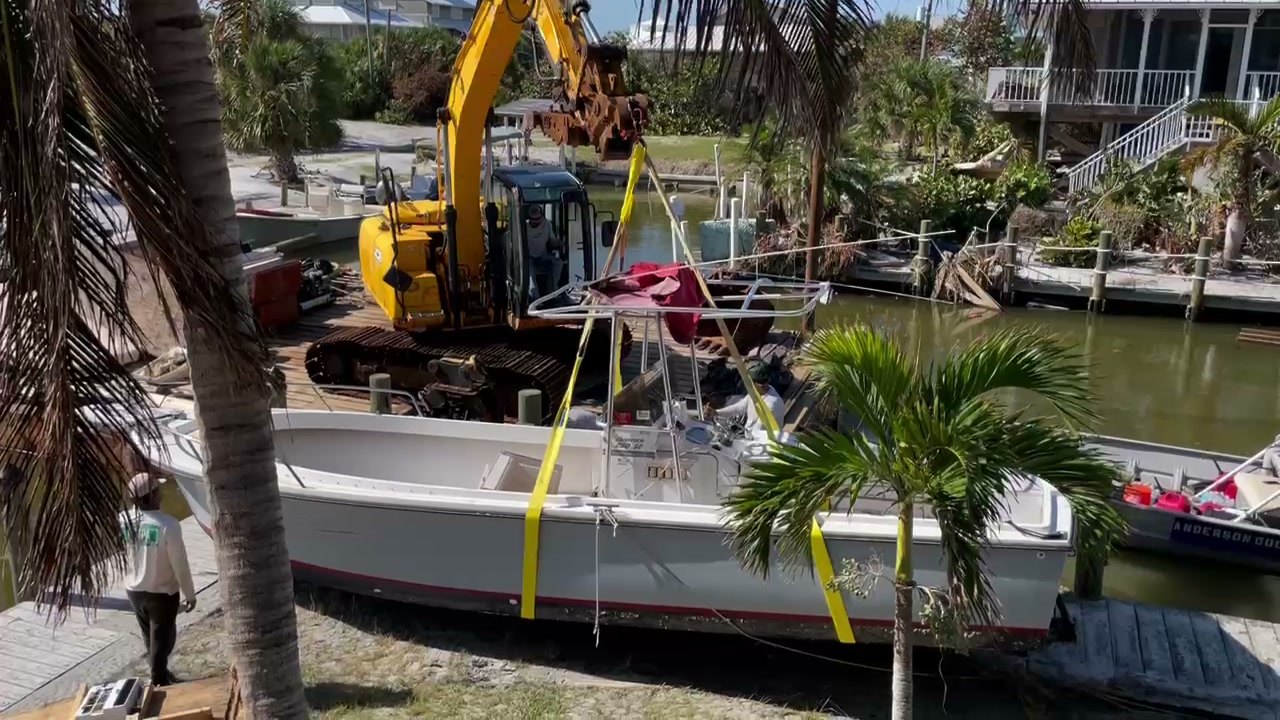
After the storm
How to document the damage
We are not insurance advisors and we do not know what your policy covers. Anyone who tells you what you will be paid before your carrier has seen the damage is guessing. We write the repair scopes that go into damage files, so we know what a useful file looks like.
Shoot wide, then medium, then close. A close-up proves a crack exists. It does not prove where on your property it is. Photograph the full run of wall or dock first.
Keep the originals. Phone photos carry the date and time in the file. Do not screenshot them. Do not send only compressed copies.
Take a walking video. Three minutes from a safe distance. Describe what you see as you go. A narrated recording made the same day is harder to dispute than a memory three weeks later.
Write it down the same day. How high the water came against something you can point to. When the surge arrived. What you saw fail.
Keep receipts for tarps and pumping and other emergency measures. Keep them separate from the repair file.
Keep your own file independent of any contractor’s. Notify your carrier promptly and ask what they need. Get your own advice before signing anything that assigns your rights or benefits under the policy to a contractor.
Permits
The state permit exemption for storm-damaged seawalls
The state permit program, run by the Florida Department of Environmental Protection (FDEP), includes an exemption for seawalls damaged by a storm. Under Fla. Admin. Code R. 62-330.051(12)(b), which implements Section 403.813(1)(e), Florida Statutes, restoring a seawall or riprap (loose rock shoreline protection) needs no state environmental resource permit when both of these are true:
- The seawall or riprap was damaged or destroyed within the last year by a discrete event, such as a storm, flood, accident, or fire.
- The restoration goes no more than 18 inches waterward of its previous location, measured from the waterward face of the existing seawall to the face of the restored seawall.
The one-year clock starts on the day of the storm. An owner who waits eighteen months no longer qualifies and has to apply for a full permit. So does a rebuild that moves the wall out more than 18 inches. The reason for moving it does not matter.
A separate paragraph, 62-330.051(12)(a), exempts construction, replacement and repair of seawalls and riprap in artificially created waterways and residential canal systems. Only the backfill needed to level the land behind them is included. Many canal lots in Manatee and Sarasota counties fall under that one with or without storm damage.
The exemption does not replace your county or city permit. Local governments on this coast are often stricter than the state. It does not apply to docks. A single-family dock is measured by the square footage it covers over the water under Section 403.813(1)(b): 1,000 square feet in most waters and 500 square feet in an Outstanding Florida Water. That state designation covers most bay waters in Manatee and Sarasota counties.
This is our plain reading of the published rules. It is not legal advice. Your parcel and your water body decide. Confirm with your building department and FDEP before you rely on it. Do not wait on storm damage. The one-year limit applies whether or not the repair feels urgent.
Key numbers
| What | Number | Where it comes from |
|---|---|---|
| Hurricane season | June 1 to November 30 | National Hurricane Center |
| Busiest months on this coast | August through October | This guide |
| State exemption for restoring a storm-damaged seawall | Damage within the last year. New wall no more than 18 inches waterward of the old face. | Fla. Admin. Code R. 62-330.051(12)(b) |
| Seawall work in canals and man-made waterways | Exempt from the state permit, with the backfill needed to level the land | Fla. Admin. Code R. 62-330.051(12)(a) |
| Single-family dock without a state permit | 1,000 square feet over the water. 500 square feet in an Outstanding Florida Water. | Section 403.813(1)(b), Florida Statutes |
| County and city permits | Still required. Local rules on this coast are often stricter than the state. | Your building department |
| Check a contractor license | Florida DBPR licensee search | Florida Department of Business and Professional Regulation |
| Anderson Dock & Lift license | SCC131152520, Certified Specialty Contractor | Florida DBPR |
Hiring a contractor
Six checks before you hire anyone after a storm
After every large storm crews arrive from out of state and are gone within months. Some are licensed and some are not. Waterfront work attracts them because few owners know what a seawall should cost. These six checks take about twenty minutes.
- 1Get the license number and look it up yourself at the Florida Department of Business and Professional Regulation’s public licensee search. Ours is SCC131152520. A legitimate contractor hands the number over without being asked twice.
- 2Confirm the license covers this trade. A general contractor’s license is not a Certified Specialty Contractor license for marine work. Neither is an electrical license. Ask which one they hold for the work they are proposing.
- 3Get the scope in writing before money moves. Materials and dimensions. Tieback design and disposal. Who pulls the permit and the schedule. A one-page quote with a single number on it is not a scope.
- 4Do not pay most of the price up front. Expect to pay a deposit. Hold the rest until work is under way on site.
- 5Ask who pulls the permit. An owner-builder permit is issued in your name as if you were doing the work yourself. A contractor who asks you to pull one for licensed work is asking you to carry their liability.
- 6Ask for local proof. References you can call. Finished jobs nearby you can drive past. A yard. A phone number that has been the same for years.
We have worked out of Bradenton since 2019. Most of our finished jobs are a fifteen-minute drive for our customers. Read what they said and see the work.
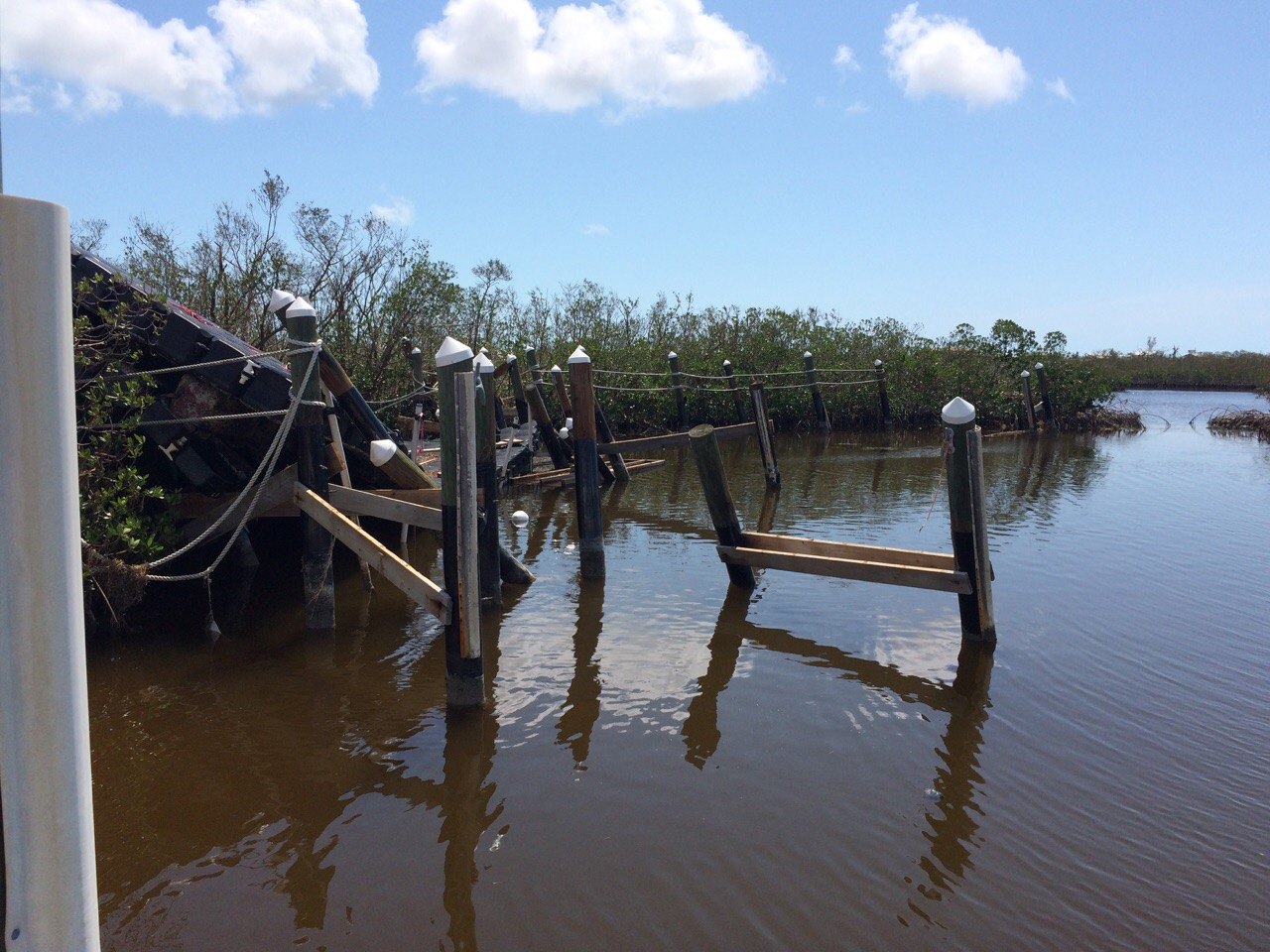
FAQ
Frequently asked questions
Should I leave my boat on the lift during a hurricane?
No. Get the boat off the lift and out of the water if you can. A lift’s weight rating assumes a boat sitting still. It says nothing about wind and surge pushing on the hull. Leaving the boat up risks the boat, the lift, the pilings and the dock together.
Can a seawall be repaired without a permit after a storm?
Sometimes at the state level. Under Fla. Admin. Code R. 62-330.051(12)(b) a seawall damaged or destroyed within the last year by a storm can be restored without a state environmental resource permit. The new wall must sit no more than 18 inches farther out than the old face. County and city permits still apply and local rules on this coast are often stricter. Confirm with your building department and FDEP before relying on it.
Do I need to document damage before cleanup starts?
Yes. Photograph and write down what you see before anything is moved or tarped or cleared. Once the debris is gone the record of how the structure failed goes with it.
What should I photograph after storm damage to a dock or seawall?
Wide shots of the full run first. Then medium shots of each damaged section. Then close-ups of each failure with something in frame for scale. Keep the original files with their date and time data. Keep your own copies separate from any contractor’s file.
How soon should a damaged seawall be looked at?
Within days. A wall that has lost fill behind it keeps losing it with every tide and every rain. The state restoration exemption also runs on a one-year clock from the storm. Book a seawall inspection early.
Is a dock that looks fine after a storm actually fine?
Not necessarily. Surge moves pilings without leaving obvious marks. Bolts and screws work loose as the dock flexes. Check whether the dock is still level and whether any piling has lifted or shifted. Check whether the boat lift still runs true. A lift that travels unevenly after a storm usually means the structure under it moved. A dock inspection settles it.
When does storm damage mean replacement rather than repair?
When the structure has deformed rather than broken. Bowing panels, a wall leaning along a run, panels that moved relative to each other or pilings that shifted usually mean replacement. Cracked caps, failed joints, lost backfill behind a plumb wall and damaged decking are usually repairs.
Will a boat lift survive a storm surge?
That depends more on the pilings under the lift than on the lift. It also depends on whether the boat was left on it. The lifts that come through are usually the ones that were empty and powered down and set to the manufacturer’s storm position on pilings sized for the load. Cables and motors and drives suffer most from sitting in salt water. Have them checked before you run the lift again.
Are storm chasing contractors licensed in Florida?
Some are and many are not. Get the license number and verify it yourself at the Florida DBPR licensee search. Confirm the license covers marine construction rather than general or electrical work.
Who should I call first after waterfront damage?
Your insurance carrier first. Open the claim and find out what they need from you. Then a licensed marine contractor for a written assessment of what failed. Doing both early gives you one documented scope instead of a stack of estimates that describe different jobs.
Next steps
Next steps
Storm damage on this coast usually hits all three structures: the seawall loses fill, the dock sits on ground that moved and the lift ends up out of level. A waterfront inspection covers all three in one visit.
Anderson Dock & Lift has worked the Gulf Coast since 2019, from St. Petersburg through Bradenton and Sarasota to Fort Myers. Residential canals and commercial waterfront. License SCC131152520. Financing available.
For seawall repairs, dock repair, piling wraps or boat lift service, request an estimate or contact us. Estimates are free. The best time to call is before the season.